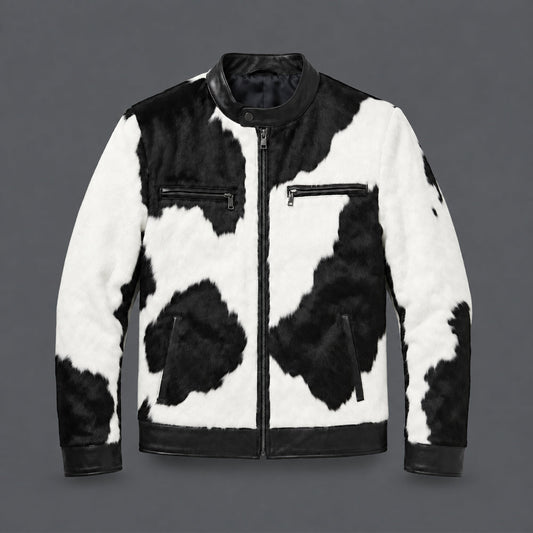
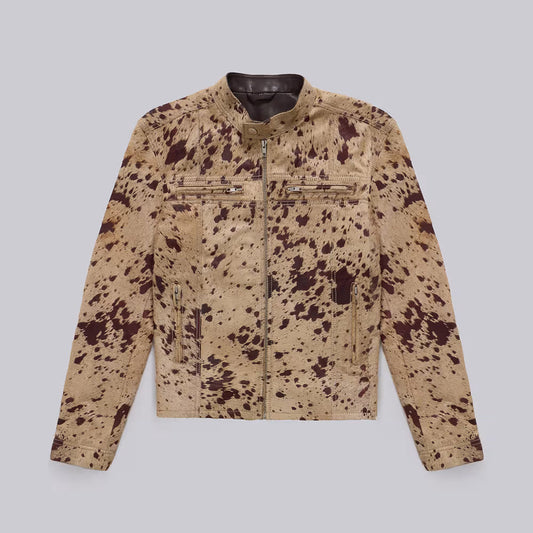
Men’s Cowhide Jackets with Natural Character
A men’s cowhide leather jacket has a presence that softer, lighter leathers do not always provide. Cowhide is naturally substantial and structured, which makes it particularly suitable for jackets with defined collars, shaped panels, secure pockets and strong fastening systems.
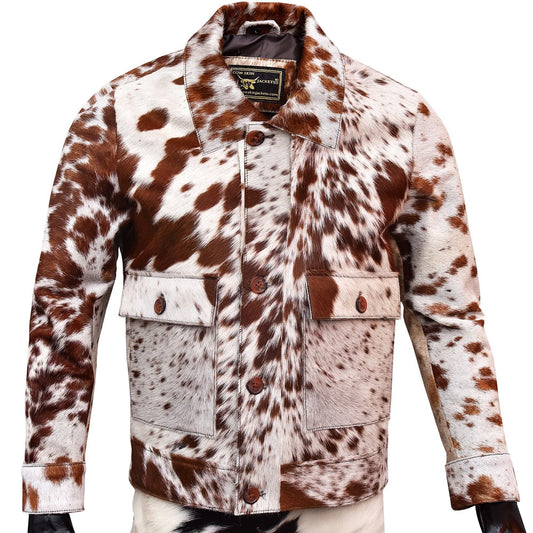
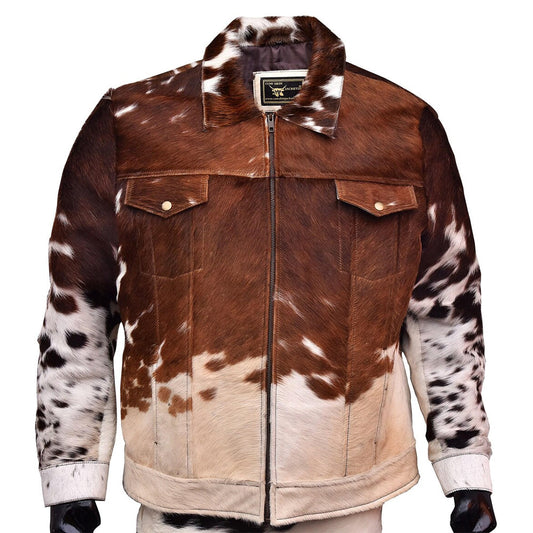
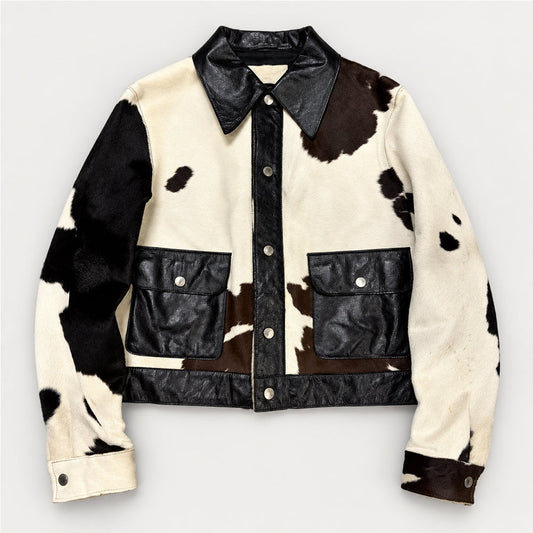
Our collection focuses on character-rich hair-on cowhide jackets. Instead of removing the natural hair during production, the hair is retained and incorporated into the design. This creates organic combinations of brown, cream, black, white, beige and speckled colouring. The placement of these markings varies naturally, so no two finished jackets can be completely identical.
The current collection moves beyond a single silhouette. It includes clean café racers, asymmetric double-rider jackets, western yoke designs, practical trucker and chore jackets, ranch-inspired pieces and contemporary hooded outerwear. For a wider look at structured riding-inspired designs, you can also explore our men’s moto leather jackets.
A Brief History of Cowhide Leather Jackets
Leather has been used for practical clothing for centuries because a properly tanned hide provides a durable layer between the wearer and the environment. During the twentieth century, leather jackets became closely associated with aviation, motorcycling, industrial work and outdoor occupations. Each setting influenced a different style.
Short flight jackets helped shape the modern bomber. Motorcycle clothing introduced close-fitting café racer and asymmetric double-rider silhouettes. Work jackets contributed straightforward button fronts, useful pockets and comfortable cuts. Ranch and western clothing brought shaped yokes, contrasting hide panels and natural hair-on surfaces into everyday fashion.
Modern cowhide jackets combine these influences. A contemporary jacket may use the shape of a vintage riding jacket, the pockets of a work coat and the natural surface of a western hide. If you enjoy clothing with an aged or heritage-led appearance, our vintage leather jacket collection offers another way to explore these influences.
What Is Hair-On Cowhide?
Hair-on cowhide is genuine cattle hide that has been processed while retaining its natural hair. The hide is preserved through tanning, while its visible surface keeps the colouring and pattern created by the animal’s coat.
Natural variation is one of the material’s defining qualities. Spots, patches, colour transitions and hair direction can change from one section of hide to another. This means the jacket you receive should reflect the same overall design and colour family shown in the product photographs, but the exact markings will be unique.
This variation is not a printing fault or a manufacturing defect. It is part of what distinguishes genuine hair-on cowhide from a mechanically repeated synthetic pattern. Small natural differences in grain, tone and surface character may also remain visible.
How Cowhide Is Tanned and Finished
Raw hide must be tanned before it can be used for clothing. Tanning stabilises the hide and helps prevent deterioration while making it suitable for cutting, sewing and long-term use.
Different tanneries may use different processes. Chrome tanning is widely used in the leather industry because it can produce supple leather with consistent colouring. Vegetable tanning uses plant-based tannins and is often associated with firmer leather that develops a pronounced patina. Combination tanning can bring characteristics of both methods together.
Hair-on cowhide requires careful processing because the hair must remain attached while the skin beneath it is preserved. After tanning, the hide may be cleaned, softened, coloured on the reverse and given a protective finish appropriate to the intended jacket.
The exact tanning and finishing process can vary between products and production batches. We therefore avoid claiming that every jacket uses one particular tanning method unless that information is stated on its individual product page.
Why Choose a Cowhide Leather Jacket?
Durable Structure
Cowhide is generally firmer and more structured than lightweight sheepskin or lambskin. It works particularly well for café racer, biker, trucker and western silhouettes that benefit from defined shaping.
Individual Appearance
Natural hair-on cowhide does not repeat like printed fabric. Each jacket has its own arrangement of markings, giving the wearer a genuinely individual garment.
Strong Visual Texture
The combination of hair-on panels, smooth leather sections, zippers, collars and shaped seams creates depth that cannot be reproduced by a flat colour alone.
Long-Term Wardrobe Value
With sensible wear, suitable storage and correct cleaning, a well-maintained cowhide jacket can remain useful for years. Smooth leather sections may soften and develop character over time, while the hair-on areas retain their natural patterned appearance.
Versatile Styling
Cowhide can be used in understated racer jackets as well as expressive western and double-rider designs. A buyer can therefore choose the strength of the material without being restricted to one look.
Styles Available in This Collection
Café Racer Jackets
The café racer is recognised by its streamlined body, short collar and relatively uncluttered front. Our men’s hair-on cowhide café racer jacket introduces natural hide markings to this otherwise minimal silhouette.
For a lighter-looking colour combination, the beige speckled hair-on cowhide racer jacket pairs a snap collar with secure zipper detailing.
Double-Rider Jackets
A double rider uses the bold visual language associated with classic biker clothing: an asymmetric front, overlapping lapels and a belt-led waist. The men’s hair-on cowhide double-rider jacket combines these details with naturally contrasting hide panels.
These jackets are fashion outerwear unless their product description specifically states that they have been tested and certified as protective motorcycle equipment.
Western and Ranch Jackets
Western jackets are often defined by shaped yokes, contrasting sections and practical pocket arrangements. The brown hair-on cowhide western yoke jacket uses dark brown and cream colouring to emphasise its ranch-inspired construction.
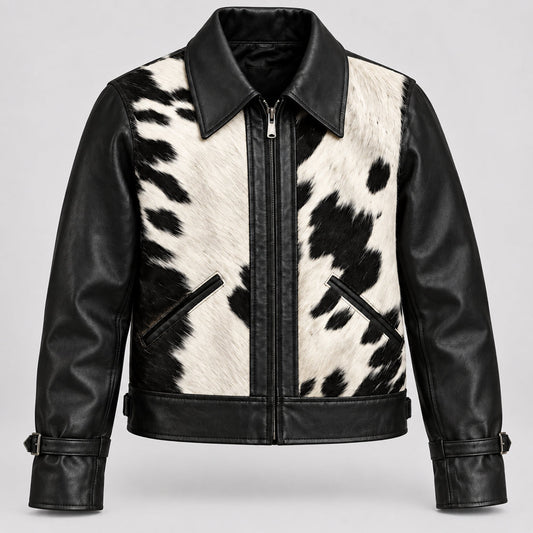
The black and white hair-on cowhide ranch jacket combines the natural hide surface with smooth leather sleeves. Shoppers interested in fringed and traditional western designs can also visit our men’s cowboy leather jacket collection.
Trucker and Snap Jackets
A trucker jacket offers a familiar everyday shape with a shorter body and defined chest area. Our chestnut hair-on cowhide trucker jacket combines that recognisable outline with natural chestnut and ivory markings.
For an alternative colour arrangement, the tricolour hair-on cowhide snap jacket uses contrasting panels to create a more expressive finish.
Chore Jackets
The chore jacket comes from practical workwear. Its relatively straightforward construction and useful pockets make it easy to combine with casual clothing. The brown and white hair-on cowhide chore jacket gives this functional design a more distinctive surface.
Hooded Cowhide Jackets
A hood can make the traditional leather jacket feel more relaxed and contemporary. The brown and cream hair-on cowhide hooded jacket combines a casual outline with the natural variation of hair-on hide.
Customers looking for classic ribbed leather outerwear may also wish to compare these pieces with our men’s leather bomber jackets.
Construction, Panels and Stitching
A jacket cannot normally be cut from one continuous piece of leather. Carefully placed panels allow the maker to shape the shoulders, sleeves, chest and back while using the strongest and most visually suitable areas of each hide.
Panel placement is especially important with hair-on cowhide. The cutter must consider colour, hair direction and the transition between adjacent sections. Symmetrical markings are not always possible or desirable because the natural pattern is irregular.
When comparing jackets, look at:
-
Alignment around the shoulders and collar
-
Clean, consistent stitching
-
Reinforcement around pockets and fastening points
-
Smooth operation of zippers and snap buttons
-
Secure attachment of belts, cuffs and hood sections
-
Neatly finished interior seams
-
A lining that sits smoothly without excessive pulling
Pocket numbers, lining materials, closures and hardware can differ between styles. Check the individual product page rather than assuming that every jacket in the collection has the same construction.
You can read more about our approach to materials and garment production on the craftmanship page.
Choosing the Right Fit
Cowhide normally feels more structured than lambskin or sheepskin, particularly when new. The jacket should have enough room for natural shoulder movement, but it should not hang so loosely that the shaped panels collapse.
Measure your chest around its fullest point while keeping the tape level. It is also useful to compare your shoulder width, sleeve length and preferred jacket length with a similar garment that already fits you.
Use our leather jacket size guide before ordering. If you intend to wear a sweatshirt or knitwear underneath, allow enough room for that layer. Shoppers between sizes should consider their preferred fit and the cut of the specific jacket rather than relying only on the S, M, L or XL label.
A café racer will normally look best with a cleaner, closer shape. A chore, trucker or hooded jacket can often be worn with slightly more room. An oversized result should come from choosing the correct measurements, not simply guessing several sizes larger.
Weight, Comfort and Seasonal Wear
Cowhide is generally more substantial than lambskin and many forms of goatskin. The final weight of a jacket depends on the thickness and area of leather used, the number of panels, its lining, hardware, hood, belt and overall size.
Hair-on cowhide is not designed to feel like a lightweight fabric jacket. Its structure is part of its appeal. However, correct pattern cutting and balanced panel placement help distribute the weight across the shoulders rather than allowing it to pull from one point.
Seasonal comfort depends on the jacket’s lining and what is worn underneath. A lined cowhide jacket can be suitable for cool autumn and spring weather, while colder conditions may require knitwear or thermal layering. Always check the individual product details because lining materials can vary.
Are Cowhide Jackets Waterproof?
Genuine cowhide should not automatically be treated as waterproof. A surface finish may provide limited resistance to light moisture, but prolonged rain can affect the leather, hair, colour and shape.
Hair-on cowhide should be kept away from heavy rain wherever possible. If the jacket becomes damp:
-
Blot excess moisture gently with a clean, absorbent cloth.
-
Hang it on a broad, supportive hanger.
-
Allow it to dry naturally in a ventilated room.
-
Keep it away from radiators, hairdryers and direct heat.
-
Brush the hair lightly in its natural direction once completely dry.
Do not apply an ordinary waterproofing spray unless its manufacturer specifically confirms that it is suitable for genuine hair-on hide. Always test any treatment on a discreet area first.
How to Style a Men’s Cowhide Jacket
Natural cowhide is already visually strong, so the rest of an outfit can remain simple. A café racer works well with a plain T-shirt, dark denim and leather boots. A brown western jacket pairs naturally with indigo jeans, a denim shirt or neutral knitwear.
Black and white cowhide can be worn with an otherwise monochrome outfit, allowing the jacket to become the central piece. Tricolour and speckled jackets work particularly well with solid colours that do not compete with the natural markings.
For a tonal wardrobe, combine a brown cowhide jacket with pieces from our brown leather jacket collection. Avoid forcing an exact colour match; slightly different brown shades often look more natural together.
Caring for Hair-On Cowhide
Correct care is different from the routine used for an entirely smooth leather jacket.
-
Remove surface dust with a very soft brush, following the direction of the hair.
-
Do not brush aggressively or repeatedly against the hair.
-
Deal with small spills by blotting rather than rubbing.
-
Never soak, machine wash or tumble-dry the jacket.
-
Avoid ordinary household detergents, alcohol wipes and cleaning solvents.
-
Do not apply leather conditioner directly over the hair.
-
Keep the jacket away from prolonged direct sunlight, which may alter its colour.
-
Use a broad hanger so the shoulders keep their intended shape.
-
Store it in a breathable garment cover, not a sealed plastic bag.
-
Leave space around the jacket so the hair is not crushed by other garments.
-
For deep cleaning, consult a specialist experienced with hair-on hide garments.
Smooth leather sleeves, collars or pocket trims may occasionally benefit from a compatible leather conditioner. Test it in a hidden area first and keep it away from the hair-on panels.
A few loose hairs can occur naturally, particularly when a garment is new. Persistent shedding, exposed bald areas or hair coming away in clumps should not be treated as routine wear.
What to Check Before Ordering
Read the individual product page and review all available images before selecting your jacket. Pay particular attention to:
-
Main leather and any contrasting materials
-
Overall colour family
-
Closure type
-
Collar or hood design
-
Pocket placement
-
Cuff and hem construction
-
Lining material
-
Available measurements
-
Care instructions
-
Natural variation notices
The product you receive will follow the pictured design, but its exact patches and markings will differ because it is made from genuine natural hide. This individual variation is central to the character of the collection.
Frequently Asked Questions
What is a cowhide leather jacket?
A cowhide leather jacket is made primarily from processed cattle hide. Cowhide is valued for its durability, structured feel and visible natural grain. This collection currently focuses on hair-on cowhide, where the natural hair remains attached to the hide.
Is hair-on cowhide genuine leather?
Yes. Genuine hair-on cowhide is real leather with its natural hair retained. The skin beneath the hair is tanned and stabilised so it can be cut and sewn into a garment.
Will my jacket look exactly like the product photographs?
The construction and overall colour family should follow the chosen product, but the precise spots, patches and colour placement will be different. Every natural hide has an individual pattern.
Are cowhide jackets heavy?
Cowhide is normally more substantial than lambskin or sheepskin. Actual weight varies according to the size, leather thickness, lining, hardware, belt, hood and number of panels used in a particular design.
Does cowhide soften over time?
Smooth cowhide sections usually become more flexible with normal wear. Hair-on areas should also settle around the wearer, although they should not be deliberately folded, crushed or aggressively softened.
Are these jackets waterproof?
Unless a product page expressly states otherwise, do not consider a cowhide jacket waterproof. Protect hair-on leather from heavy rain and allow any damp jacket to dry naturally away from direct heat.
Are cowhide jackets windproof?
Leather can reduce some airflow, but the jacket’s seams, zipper, cuffs, collar and lining determine its overall wind resistance. It should not be described as fully windproof unless that feature has been specifically tested.
Are hair-on jackets warm?
The hide provides a substantial outer layer, but warmth also depends on the lining, fit and clothing worn underneath. Review the individual lining information and allow room for appropriate layering.
Can a hair-on cowhide jacket be worn every day?
It can be worn regularly, but repeated friction may gradually wear the hair around high-contact areas. Car seat belts, backpack straps, rough surfaces and tightly packed storage can increase this wear.
How should I clean hair-on cowhide?
Use a soft brush for light dust and blot small spills without rubbing. For stains or thorough cleaning, use a professional cleaner who has experience with genuine hair-on hide. Do not machine wash the jacket.
Can I use leather conditioner on it?
Do not spread ordinary leather conditioner over the hair-on surface. A suitable conditioner may be used sparingly on smooth leather sections after a patch test, provided it does not touch the hair.
Will a hair-on jacket shed?
A few loose hairs can be normal, especially at first. Excessive shedding or the development of bald patches is not expected and should be investigated rather than ignored.
How should I store my jacket?
Hang it on a wide, supportive hanger in a cool and dry space. Use a breathable garment cover and leave enough room to prevent the hair from being flattened. Avoid sealed plastic storage.
How do I choose my size?
Measure your chest, shoulders and sleeve length, then compare them with the measurements provided for the jacket. Use the size guide and allow extra room if you plan to wear thick layers underneath.
What is the difference between a café racer and a double-rider jacket?
A café racer usually has a clean front, a short snap collar and a streamlined fit. A double rider generally uses an asymmetric zipper, wider lapels and a more expressive biker-inspired construction, sometimes with a waist belt.
Are these jackets protective motorcycle clothing?
A fashion leather jacket should not be treated as protective motorcycle equipment unless its listing states that it has been tested and certified for that purpose. Riders should check for appropriate impact protection, seam strength and safety certification.
Is cowhide better than sheepskin?
Neither material is universally better. Cowhide usually offers greater structure and a more substantial feel, while sheepskin is often lighter and softer. The right choice depends on the desired style, weight, flexibility and weather conditions.
What makes a well-made cowhide jacket?
Look for balanced panels, consistent stitching, reinforced pocket openings, smoothly operating hardware, a stable lining and clean interior finishing. With hair-on leather, thoughtful colour placement and hair direction are also important.