Men’s Cowboy Leather Jackets
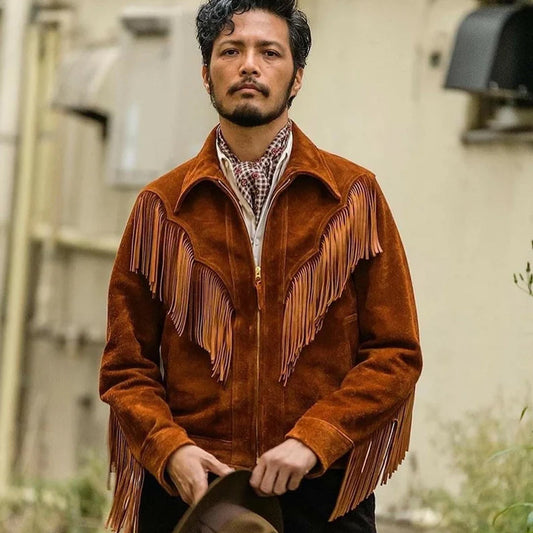
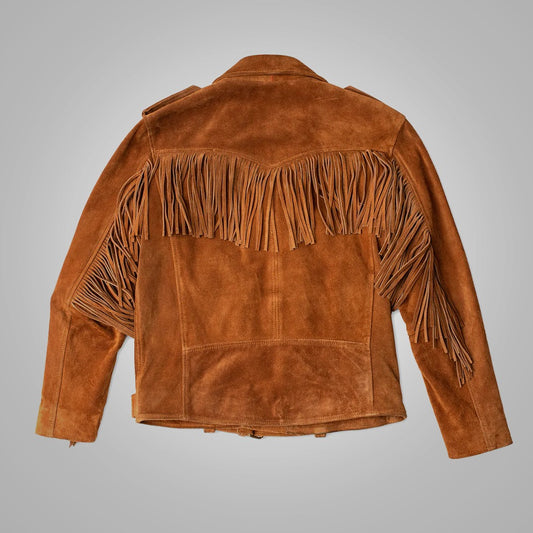
A cowboy leather jacket is more than a brown coat with fringe. Its character comes from the relationship between the hide, the cut and the details: shaped Western yokes, long leather fringe, practical pockets, metal hardware and a silhouette that feels connected to ranch clothing, frontier dress, rodeo tailoring and twentieth-century Western style.
Our Men’s Cowboy Leather Jacket collection brings these influences into modern outerwear. The range is being built around two principal materials: soft suede cowboy jackets with fringe and smooth-finished sheepskin leather jackets with Western detailing.
Some designs will lean towards the relaxed, weathered character of traditional buckskin clothing. Others will use cleaner panels and a more refined sheepskin finish. What connects them is a recognisable Western identity rather than one fixed pattern.
If you like the texture of brushed leather but prefer designs without extensive fringe, explore our wider collection of men’s suede jackets.
What Defines a Cowboy Leather Jacket?
There is no single construction shared by every cowboy jacket. Historic garments, working ranch clothing, rodeo outfits and film costumes all contributed different details to what is now called Western wear.
A modern cowboy leather jacket may include:
- Fringe across the chest, back, sleeves or shoulders
- Pointed or curved Western yokes
- Suede, buckskin-style or smooth leather construction
- Snap-button or zipper closures
- Patch, welt or flap pockets
- Shirt-style, spread or stand collars
- Contrast panels and piped edges
- Concho, stud, embroidery or bead-inspired details
- Adjustable cuffs, waist tabs or side laces
- A relaxed ranch fit or a shorter fitted silhouette
Not every jacket needs every feature. A clean suede jacket with a shaped yoke and restrained sleeve fringe can feel just as Western as a heavily decorated stage jacket.
The best design is one in which the leather, stitching and embellishment work together rather than competing for attention.
The History Behind Fringed Western Jackets
Fringed leather clothing has a longer and more complex history than the familiar image of the Hollywood cowboy.
Indigenous peoples across North America developed sophisticated traditions of hide preparation, garment construction, quillwork, beadwork and leather decoration long before the rise of commercial Western wear. Métis makers also became known for finely constructed buckskin garments decorated with floral beadwork and fringe.
These traditions influenced the clothing worn by frontier travellers, scouts and other Euro-American wearers. Soft hide garments were adapted into coats, hunting shirts and jackets cut in European shapes but made from locally available leather.
For this reason, it is more accurate to view the fringed Western jacket as the result of cultural exchange, adaptation and later commercial styling—not as an invention belonging exclusively to cowboys.
By the late nineteenth and early twentieth centuries, buckskin clothing had become closely associated with popular images of the frontier. Rodeo performers, travelling Western shows and early film helped turn certain details—especially fringe, pointed yokes and decorative leatherwork—into instantly recognisable symbols of the American West.
From the 1930s onward, singing cowboys and film stars introduced a more theatrical version of Western clothing. Their tailored shirts, jackets and suits often used bold embroidery, piping, rhinestones and exaggerated fringe. Rodeo and stagewear designers transformed practical ranch references into clothing intended to be visible from a distance.
That highly decorative period had a lasting influence on modern Western fashion. Today’s cowboy leather jacket can draw from ranch wear, frontier clothing, rodeo tailoring, music culture or vintage cinema without needing to reproduce one historical garment exactly.
For more aged finishes and heritage-influenced silhouettes, browse our men’s vintage leather jackets.
Fringe: Movement, Texture and Western Identity
Fringe is the feature most people immediately associate with a cowboy suede jacket. It adds movement to the garment and makes the outline more expressive as the wearer walks.
The location of the fringe changes the jacket’s character:
Chest and Back Fringe
A row of fringe placed beneath a Western yoke draws attention across the shoulders. It is one of the most recognisable cowboy-jacket arrangements and works particularly well on soft suede.
Sleeve Fringe
Fringe running along the outside of the sleeves produces more movement. Longer sleeve fringe creates a dramatic rodeo or stagewear appearance, while shorter cuts feel easier to wear casually.
Shoulder Fringe
Fringe placed around the shoulder line gives the jacket a broader visual profile. It can be used alone or continued across the upper back.
Hem Fringe
A fringed hem creates a more relaxed, vintage-inspired shape. Because the strips hang lower than the jacket body, the listed garment length and fringe length should be checked separately.
Pocket and Yoke Fringe
Shorter fringe around pockets or shaped yokes provides Western character without covering the entire jacket. This is a practical option for customers who want the look in a more restrained form.
On contemporary jackets, fringe is principally a design feature. It should hang freely, move naturally and be cut evenly enough to avoid looking tangled or excessively bulky.
Understanding the Leather Types
“Cowboy leather” is a style category, not one specific animal hide. The leather used can significantly change a jacket’s weight, texture, drape and care requirements.
Suede Cowboy Jackets
Suede describes a surface finish rather than an animal species. It is created by working the inner or flesh side of a hide to produce a soft, raised nap.
The resulting surface is matte, tactile and able to display subtle changes in colour as the fibres move. These qualities make suede particularly effective for cowboy jackets because it creates a visual connection with historic buckskin clothing without requiring modern garments to use deerskin.
Goatskin suede is a practical contemporary option. It can produce a relatively fine nap while retaining enough strength to support yokes, pockets and rows of cut fringe. However, the exact animal hide should always be confirmed on the individual product page rather than assumed from the word “suede.”
Suede fringe tends to move more softly than fringe cut from heavily finished smooth leather. It also develops a relaxed appearance with wear, which suits vintage and ranch-inspired designs.
Smooth-Finished Sheepskin Leather
Smooth-finished sheepskin offers a different interpretation of the cowboy jacket. It generally feels softer and more supple than heavy cowhide, allowing fringe and shaped panels to move without making the jacket excessively rigid.
A surface finish may give the sheepskin a clean matte appearance, a light sheen or a worn vintage effect, depending on the individual design.
Sheepskin leather should not automatically be confused with shearling. A jacket described as sheepskin leather may use the hide without retaining a wool fleece. If a product includes genuine shearling or a wool-backed interior, that information should be stated separately on its product page.
Customers looking specifically for fleece-backed cold-weather outerwear can compare the available men’s sheepskin jackets.
Historic Buckskin and Modern Buckskin-Inspired Leather
Historically, the word buckskin most often referred to soft leather made from deer hide, although other hides were also used for historic fringed garments.
Modern Western fashion frequently uses the term “buckskin style” to describe a colour, texture or construction rather than the literal animal source. A tan goat-suede jacket can have a buckskin-inspired appearance without being made from deer.
For transparency, the product specification should always be treated as the authority. If a jacket is goatskin suede or sheepskin leather, it should be described using that exact material rather than labelled genuine buckskin.
Why Hide, Finish and Thickness Matter
Two cowboy jackets can share the same pattern and still feel very different because of the leather.
A thinner suede may create softer fringe and a relaxed drape. A thicker leather can hold a sharper yoke and more structured collar but may feel heavier. A smooth finish makes the colour look more uniform, while brushed suede creates natural tonal movement.
When comparing products, consider:
- Animal hide
- Leather or suede finish
- Approximate thickness
- Net garment weight
- Lining composition
- Fringe length
- Closure type
- Pocket layout
- Weather limitations
- Intended fit
Each product page should identify these points where applicable. We do not treat suede, sheepskin, buckskin and shearling as interchangeable terms.
You can read more about how Leather Wear UK approaches materials and construction on our craftsmanship page.
Western Yokes and Panel Construction
A shaped yoke is one of the details that separates a cowboy jacket from a basic suede coat.
The yoke may be pointed, curved or gently scalloped. It can run across the front, back or both. Apart from its visual role, it provides a stable seam from which fringe can be suspended.
On well-balanced designs, the yoke shape aligns across the shoulders and does not twist the fringe towards one side. The fringe should be inserted securely into the seam rather than attached only at isolated points.
Other construction details may include:
- Reinforced shoulder seams
- Double-needle topstitching around yokes
- Panelled sleeves for easier movement
- Leather facings behind front closures
- Reinforced pocket openings
- Lined fringe seams
- Back pleats or gussets
- Adjustable waist tabs
Product images and specifications should be checked for the exact construction used on each jacket.
Choosing Between Suede and Smooth Sheepskin
Choose suede if you prefer a matte finish, visible texture and a relaxed vintage character. Suede works especially well with longer fringe because the cut strips move easily and do not look overly stiff.
Choose smooth-finished sheepskin if you want a cleaner surface, more defined panels and easier light surface maintenance. Smooth leather may also give metal snaps, conchos and contrast stitching a sharper background.
Neither material is universally better. The right choice depends on how you want the jacket to look, how often you will wear it and how much maintenance you are prepared to give the surface.
Selecting the Right Fit
Fringe adds visual width and movement, but it does not determine the actual body measurement of the jacket. Choose a size using the chest, shoulder, sleeve and waist measurements of the leather body itself.
A relaxed cowboy jacket leaves room for a shirt or light knit underneath. A fitted Western jacket sits closer through the chest and waist, giving the yokes and fringe a sharper outline.
Customers planning to layer over a sweatshirt should measure while wearing a similar garment. Sleeve length is particularly important on jackets with cuff or arm fringe, as altering the sleeves later may disturb the fringe placement.
Compare your measurements with the Leather Wear UK size guide before ordering.
How to Wear a Cowboy Leather Jacket
A fringed jacket already carries strong visual detail, so the rest of the outfit can remain simple.
Brown, tan and tobacco suede work naturally with dark denim, cream shirts, boots and muted knitwear. Black trousers can give a brown cowboy jacket a more contemporary appearance.
A smooth sheepskin Western jacket can be worn over a plain T-shirt for everyday use or combined with a denim shirt and boots for a more traditional look.
Customers who prefer warm natural shades without fringe can also explore our brown leather jacket collection.
Avoid combining extensive fringe, large embroidery, patterned trousers and heavily decorated boots unless an intentionally theatrical rodeo or stagewear outfit is the goal.
Caring for a Suede Cowboy Jacket
Suede should be kept away from heavy rain, oils and ordinary leather polish. Unless a product page specifically states otherwise, a suede cowboy jacket should not be treated as waterproof.
Use a clean suede brush to remove dry dust and restore the nap. Brush gently in a consistent direction rather than scrubbing one area aggressively.
If the jacket becomes lightly damp, blot the surface with an absorbent cloth without rubbing. Hang it on a broad, supportive hanger and allow it to dry naturally at room temperature.
Do not place wet suede beside a radiator or use a hairdryer. Rapid heat can stiffen the leather, affect the colour and cause the jacket to dry out unevenly.
Once fully dry, brush the nap gently. For grease, deep staining or widespread water marks, use a professional cleaner experienced with suede garments.
Caring for Smooth Sheepskin Leather
Remove light surface dust with a soft, dry cloth. If a specialist leather conditioner is used, confirm that it is suitable for the particular finish and test it on a hidden area first.
Do not automatically apply saddle soap, household oils or heavy waxes. These products can darken the leather, affect the finish and attract dirt.
Allow damp leather to dry naturally on a broad hanger. Keep it away from direct heat and prolonged sunlight.
For deep cleaning, colour restoration or damaged finishes, consult a leather-care professional.
Looking After Leather Fringe
Fringe requires more space than an ordinary jacket. Store the garment where the strips can hang freely without being crushed against other clothing.
Use clean fingers to separate lightly tangled fringe. Work from the attachment seam towards the ends, handling only a few strips at a time. Do not pull, comb aggressively or cut uneven pieces without professional advice.
Avoid folding the jacket through the yoke or leaving the fringe trapped beneath the garment. Long-term compression can create bends that are difficult to remove.
If fringe becomes wet, arrange the strips so they hang separately while the jacket dries naturally. Do not twist them together or apply direct heat.
Storage
Use a broad hanger that supports the shoulders without creating pressure points. A breathable garment cover is preferable to sealed plastic for long-term storage.
Keep the jacket in a dry, ventilated wardrobe away from direct sunlight. Prolonged light exposure can alter dyed leather, while damp storage can encourage odour or mould.
Before storing the jacket for a season, make sure it is dry and free from surface dirt. Give long fringe enough vertical space to hang naturally.